Whole-body cryotherapy chambers sit in elite training complexes from Manchester to Melbourne, yet the evidence for their role in athlete rehab remains colder than the nitrogen vapor they emit. I watched a Premier League physiotherapist run a post-match recovery session last season: players cycled through three-minute bouts at −110°C, skin mottled red, breath pluming. The physiological rationale—vasoconstriction, reduced metabolic rate。attenuated inflammatory cascade—sounds plausible. But when you dig into the literature, cryotherapy for athlete rehab often functions more as ritual than rehabilitation. A 2022 meta-analysis in Sports Medicine found that whole-body cryotherapy reduced subjective soreness scores by roughly 1.5 points on a 10-point scale compared to passive recovery, but showed no meaningful effect on objective markers like creatine kinase clearance or muscle force recovery at 24 and 48 hours. That gap between how athletes feel and how they actually recover should give any clinician pause.Where cryotherapy does earn its place in athlete rehab is in acute soft-tissue management, not the whole-body circus. Partial-body cryotherapy, or targeted icing protocols, remains a cornerstone of the POLICE principle—protection, optimal loading, ice, compression, elevation. I recall a case from a collegiate track program: a sprinter with acute hamstring strain underwent 10-minute ice bag application every two hours for the first 48 hours, combined with compression wraps. Return-to-sprint time was 19 days, well within expected ranges for grade II strains. The ice didn't accelerate healing—it managed pain enough to allow controlled loading。which drove the actual tissue repair. That distinction matters. Cryotherapy for athlete rehab is an analgesic tool, not a regenerative one.The psychological dimension deserves more attention than it typically receives. Athletes who believe cold exposure aids recovery may report lower perceived exertion and better sleep quality—placebo effects with real behavioral consequences. A rugby sevens player I spoke with insisted cryotherapy sessions were the only thing that got him through tournament weekends. His objective sprint data showed no post-cryotherapy improvement, but his adherence to subsequent training loads was impeccable. Confidence in a recovery modality can sustain training consistency, which indirectly supports rehab outcomes. Dismissing this as mere placebo misses the point: athlete buy-in is a legitimate clinical variable.Practical delivery of cryotherapy for athlete rehab demands precision. Chamber temperatures below −130°C introduce frostbite risk with exposed skin;protocols requiring minimal clothing and dry skin are non-negotiable. Contraindications—Raynaud's phenomenon, cold urticaria。
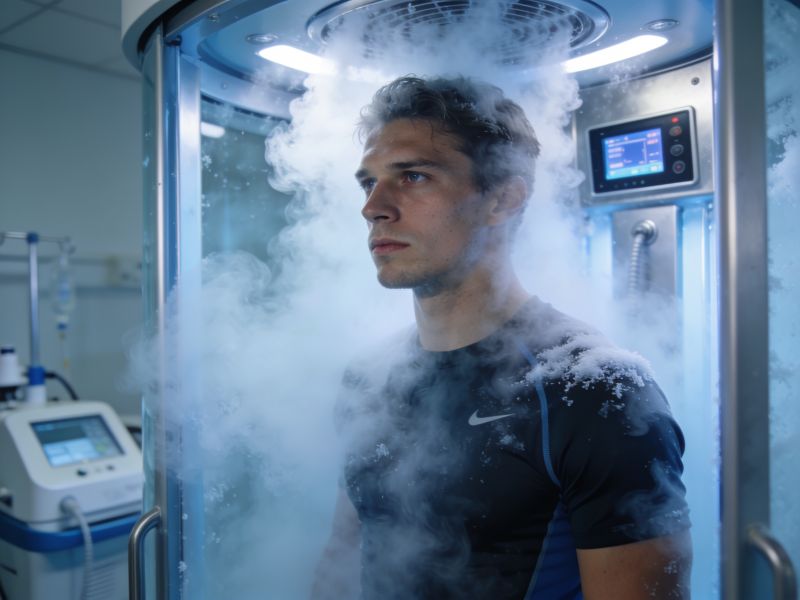
hypertension, pregnancy—are absolute. I've seen athletes shiver violently inside chambers, which defeats the purpose entirely by raising core temperature and muscle tone. Clinicians must monitor for shivering and terminate exposure immediately. Duration should rarely exceed three minutes for whole-body protocols;partial-body applications can extend to 10–15 minutes with regular skin checks. Timing relative to training also matters: pre-cooling before explosive efforts may impair power output, while post-session cooling is the more defensible application window.
Cryotherapy will not fix a torn ACL or replace progressive loading in tendon rehab. It sits in the adjunctive toolkit alongside compression, elevation, and sleep hygiene—useful when applied with clear intent, wasteful when treated as a panacea. The athletes who benefit most are those using cold exposure to manage pain sufficiently to engage with active rehab, not those substituting chambers for strength work. I'd argue the field needs more head-to-head trials comparing cryotherapy against cheaper, equally plausible alternatives like cold-water immersion or even active recovery cycling. Until those data arrive。the cold chamber remains a sophisticated comfort measure—valuable, yes, but not the hero of the rehab story.